
Table of Contents
ToggleOn-Page SEO Checklist Every Blogger Should Follow
Growing a business account requires a slightly different approach than a personal brand because you need to balance promotional content with value-driven content. Audiences follow business accounts for what they learn or gain — not to be sold to. Understanding this is key to knowing how to grow your Instagram following organically as a business.
The ideal content ratio for a business Instagram is 80% value-driven content (educational, entertaining, inspirational) and 20% promotional content (service offers, product features, calls to action). This keeps your audience engaged and prevents the unfollows that come with overly salesy accounts.
Use Instagram Stories to show the human side of your brand daily. Behind-the-scenes glimpses, team moments, polls about your audience’s preferences, and quick-tip slides in Stories build a community feel that feed posts cannot replicate. Businesses that master Stories alongside their feed strategy grow significantly faster than those focusing on feed content alone.
If you want to complement your Instagram growth with a broader digital strategy, Hardee Desai’s social media marketing services in Ahmedabad offer end-to-end support tailored for growing businesses.
Whether you have just written your first blog post or you are managing a growing content site, one thing remains non-negotiable: on-page SEO. It is the foundation that determines whether your content gets discovered or buried on page 10 of Google. If you have been creating great content but seeing little organic traffic, chances are your on-page SEO checklist needs serious attention. This guide walks you through a complete on-page SEO checklist from keyword usage to image optimisation so that every post you publish has the best possible chance of ranking.
What Is On-Page SEO — And Exactly How Do You Do It?
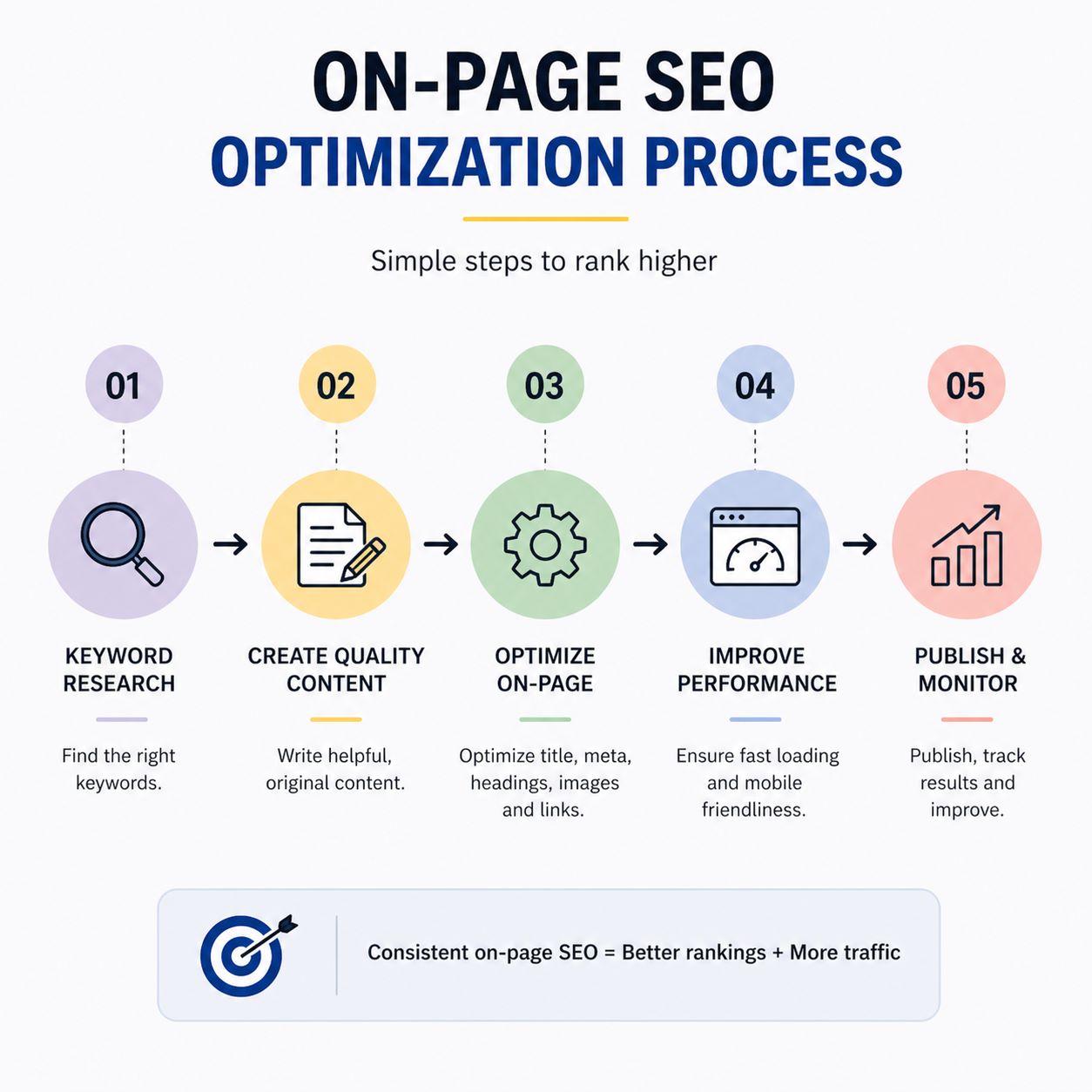
On-page SEO refers to all the optimisation techniques applied directly on your web page to improve its search engine rankings. Unlike off-page SEO, which involves backlinks and external signals, on-page SEO is entirely within your control. It includes everything from your title tag and meta description to the structure of your content, the images you use, and how your page links to other content on your site.
When you ask yourself what is on-page SEO and how to do it, the answer starts with understanding search intent. Google ranks pages that best satisfy what a user is actually looking for. So before you write a single word, identify the search intent behind your target keyword. Is the user looking for information, a comparison, or a product? Tailor your content accordingly. Running through a proper on-page SEO checklist before publishing helps you consistently match search intent and improve your chances of ranking.
Hardee Desai’s digital marketing services in Ahmedabad are built on exactly this principle understanding user intent first, then building a strategy around it
How to Use Keywords in Blog Posts Without Sounding Robotic
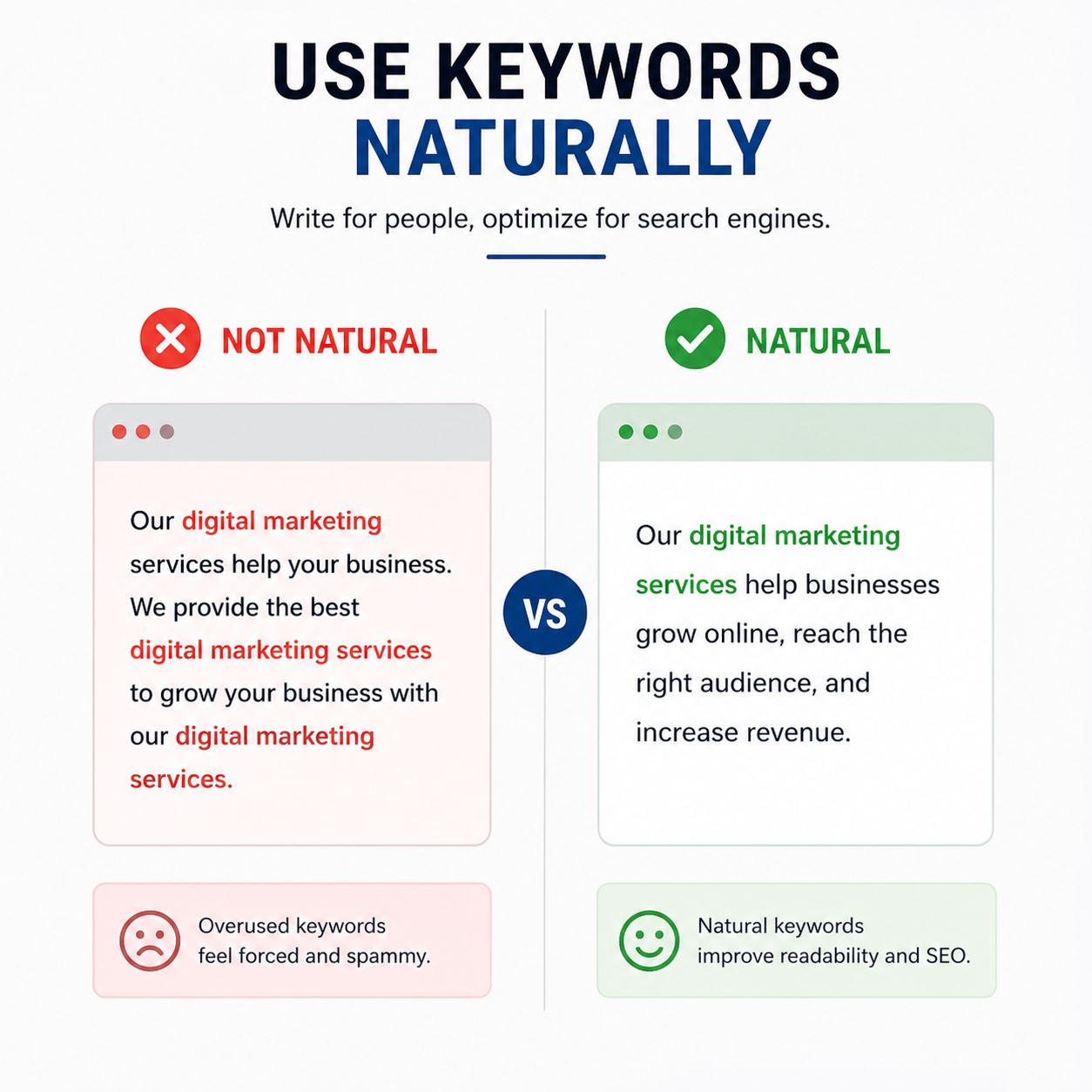
The most common mistake bloggers make is keyword stuffing repeating the same phrase so many times that the content becomes unreadable. Modern SEO does not reward this. Google’s algorithms are sophisticated enough to understand synonyms, related phrases, and the context of your writing. Use your primary keyword naturally in the opening paragraph, in at least one subheading, and in the conclusion.
The right approach to how to use keywords in blog posts is to use semantic variations. If your keyword is “content marketing strategy,” also use phrases like “content planning for brands,” “editorial calendar tips,” or “blog content that converts.” This signals topical authority to Google without over-repetition. Think of your on-page SEO checklist as a guide for natural keyword distribution not a formula for force fitting terms.
A smart way to improve your on-page SEO checklist is by focusing on natural keyword placement instead of repeating the same phrase everywhere. Search engines today understand context, which means bloggers should use related terms naturally throughout the article. Including phrases like title tag optimization for blog, meta description tips for blog SEO, and on page seo techniques step by step helps search engines understand the overall topic without making the content look forced.
Bloggers should also use keywords inside headings, image alt text, and internal links wherever relevant. For example, using descriptive anchor text improves the internal linking strategy for bloggers while helping readers navigate related content more easily. A balanced keyword strategy improves readability, strengthens topical relevance, and supports long-term SEO growth.
Use tools like Google Search Console, Ubersuggest, or Ahrefs to identify related terms your audience searches for. Weave these naturally into your subheadings, paragraph text, and image alt attributes.
Your Complete On-Page SEO Checklist to Tick Off Before You Hit Publish
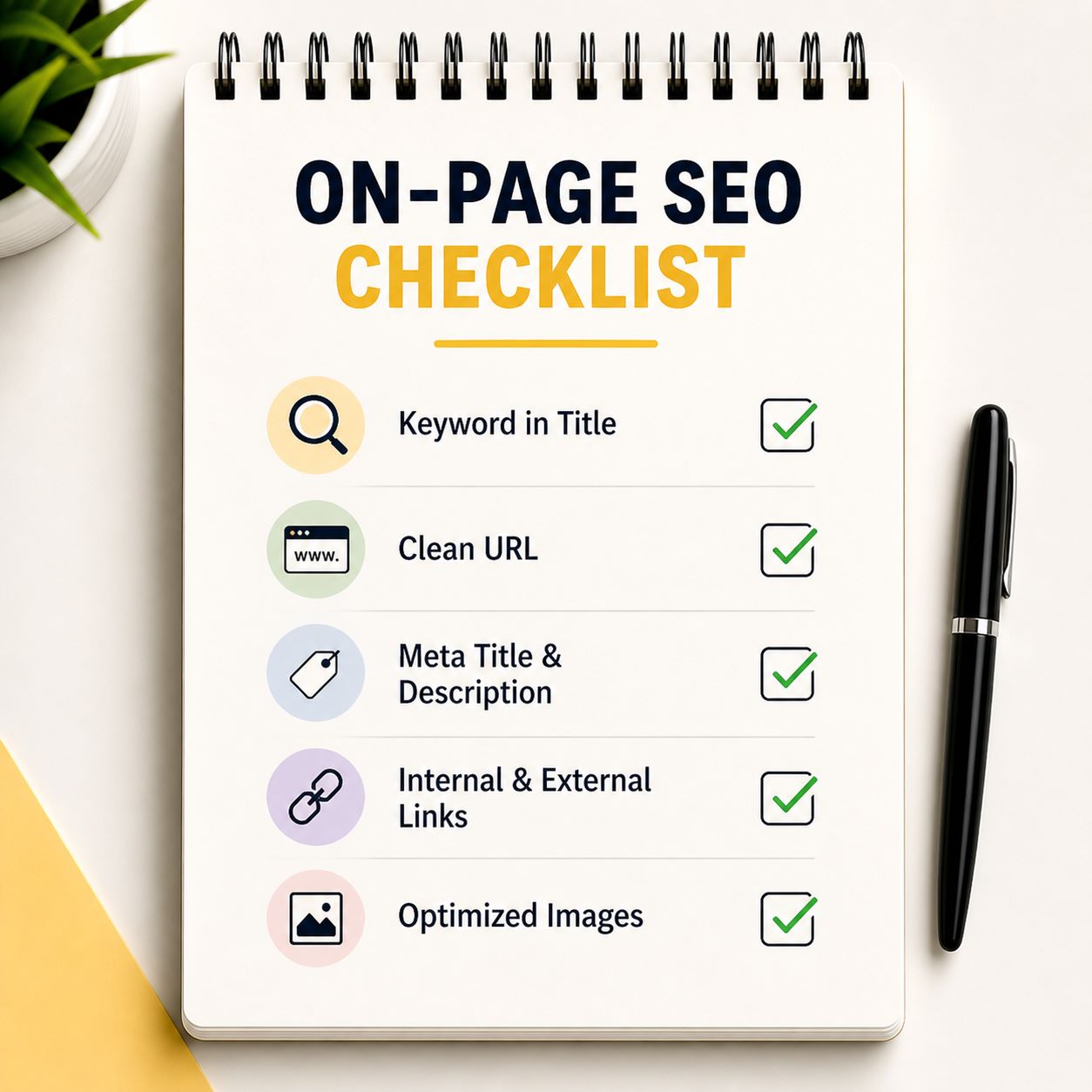
Before you publish any blog post, run through this on-page SEO checklist systematically. Think of it like a pre-flight check for your content. Every item on this list directly impacts how search engines discover and rank your article:
- Primary keyword appears in the title, first paragraph, one H2, and the conclusion
- URL is short, descriptive, and includes the target keyword
- Meta title is under 60 characters and includes the keyword
- Meta description is under 160 characters and has a clear value proposition
- All images have descriptive alt text
- At least one internal link to a related blog or service page
- At least one outbound link to a credible external source according to Moz’s On-Page SEO Guide, linking to authoritative references signals content quality to search engines and strengthens your page’s topical relevance.
- Content is minimum 1,500 words for informational topics
- Page loads in under 3 seconds on mobile
- Schema markup (Article, FAQ, or HowTo) is added where applicable
This on-page SEO checklist, when applied consistently, can dramatically improve your blog’s visibility over time.
Another important step in every on-page SEO checklist is checking whether all SEO elements work together properly before publishing. Bloggers often optimise content for keywords but forget important factors like readability, mobile responsiveness, and content structure. Following proper on page seo techniques step by step helps improve both user experience and search visibility.
Your content should include a clear heading structure, optimised images, and properly written meta information. Applying effective title tag optimization for blog posts improves click-through rates because users immediately understand the value of the page in search results. Similarly, following meta description tips for blog SEO helps create compelling snippets that encourage more users to click your content.
Internal links should also be reviewed carefully before publishing. A strong internal linking strategy for bloggers improves website navigation, distributes authority across pages, and increases time spent on the website. Small improvements in formatting and optimisation can create a significant impact on overall rankings.
On-Page SEO Mistakes Bloggers Must Avoid
Even after following a proper on-page SEO checklist, many bloggers unknowingly make mistakes that hurt their rankings. One of the biggest issues is publishing content without understanding user intent. A blog post may be well-written, but if it does not answer the exact question users are searching for, Google is unlikely to rank it highly. Another common mistake is over-optimising content by forcing the same keyword repeatedly into headings and paragraphs.
Many bloggers also ignore mobile optimisation. Today, the majority of users browse content on mobile devices, and Google uses mobile first indexing. If your page looks cluttered or loads slowly on mobile, your rankings can suffer significantly. Broken internal links, duplicate meta descriptions, and poorly structured headings also weaken SEO performance over time.
One of the biggest mistakes bloggers make while following an on-page SEO checklist is focusing only on keywords while ignoring content quality. Search engines now prioritise useful and engaging content that solves user problems completely. Articles with practical examples, actionable advice, and proper formatting usually perform better than thin content written only for rankings.
Another common issue is weak title tag optimization for blog pages. Generic titles reduce click-through rates and fail to attract user attention in search results. Every title should clearly communicate value while naturally including the target keyword. Bloggers should also avoid writing duplicate meta descriptions and instead follow proper meta description tips for blog SEO to improve search performance.
Ignoring internal links is another major SEO problem. A proper internal linking strategy for bloggers helps readers discover related content and improves website structure for search engines. Without internal links, valuable pages may struggle to gain visibility and authority over time.
Title Tag Optimization: How to Write Tags That Rank
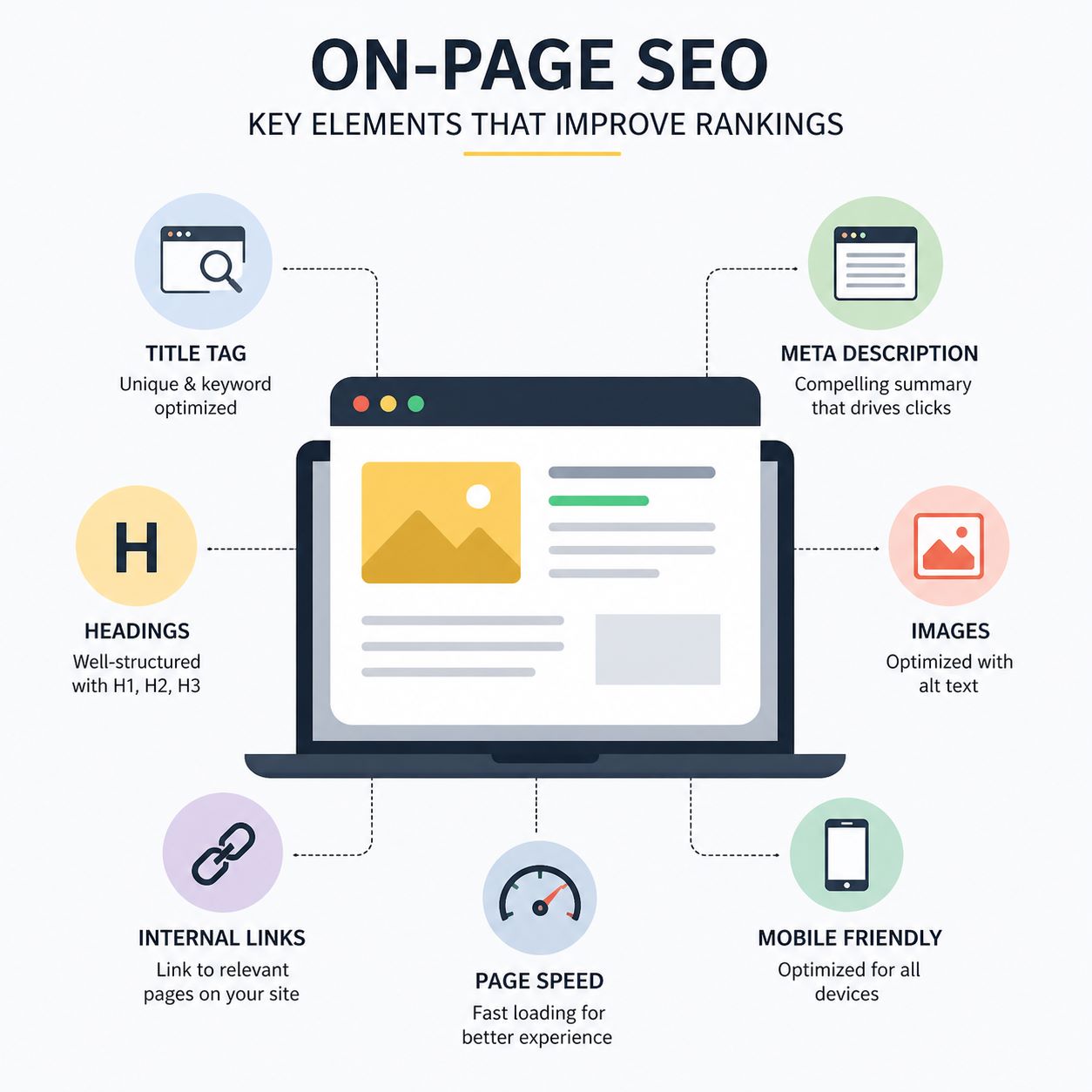
Your title tag is the single most important element in any on-page SEO checklist. It is what appears in Google search results as the clickable blue headline, and it is the first thing both search engines and users read. Title tag optimisation for blog posts means balancing keyword inclusion with user appeal.
An ideal title tag is between 50 and 60 characters. It should contain your primary keyword near the beginning, communicate a clear benefit, and create curiosity or urgency where appropriate. For example, instead of writing “SEO Tips,” write “On-Page SEO Tips That Actually Move Your Rankings in 2026.” Always write unique title tags for every page — duplicate title tags confuse search engines and reduce the chances of multiple pages ranking for different queries.
Meta Description Tips That Actually Improve Your Blog's SEO
While meta descriptions are not a direct ranking factor, they significantly impact click-through rates. Following meta description tips for blog SEO means writing a compelling 150 to 160 character summary that gives readers a reason to click.
Include your primary keyword naturally, but focus more on the benefit to the reader. Use active language: “Discover,” “Learn,” “Get,” or “Find out.” Add a light call to action at the end. For example: “Learn the exact on-page SEO steps bloggers use to double their organic traffic. Start optimising your posts today.” Avoid generic descriptions that could apply to any page specificity drives clicks, and clicks drive rankings.
Image Alt Text Best Practices for Better SEO
Images make content more engaging, but they also offer an overlooked SEO opportunity. Applying image alt text SEO best practices means writing descriptive, keyword relevant alt text for every image on your page.
Alt text should describe the image accurately and, where natural, include your target keyword or a related phrase. For example, if you have an image showing an SEO checklist in a notebook, your alt text could be: “on-page SEO checklist written in a notebook.” Also optimise your image file names before uploading instead of “IMG_4521.jpg,” rename the file to “on-page seo checklist.jpg.” This reinforces your page’s topical relevance to search engines.
On-Page SEO Techniques You Can Follow Step by Step
If you want to improve your search rankings systematically, follow these on-page SEO techniques step by step. This is a practical workflow you can apply to every post as part of your standard on-page SEO checklist:
- Research your keyword and confirm search intent using Google’s search results page
- Write a title tag that includes the keyword and a clear benefit
- Structure your content with H2 and H3 subheadings that cover related subtopics
- Write the meta description using active language and your primary keyword
- Add optimised alt text to every image
- Include at least two internal links to related content on your site
- Link to one or two authoritative external sources to add credibility
- Check your content for readability using tools like Hemingway Editor
- Submit your URL to Google Search Console after publishing
Following these steps consistently will compound your results over several months.
Why Content Readability Matters for Better Rankings
A major part of any on-page SEO checklist is improving readability. Search engines analyse user behaviour signals such as bounce rate, time spent on page, and engagement. Good readability starts with proper formatting — use shorter paragraphs, meaningful subheadings, bullet points, and enough white space between sections. Writing in a conversational tone helps readers stay engaged longer, which positively impacts engagement metrics that Google tracks.
Readability is an essential part of every successful on-page SEO checklist because user engagement directly affects search rankings. Readers prefer content that is easy to scan, visually clean, and properly organised with headings and shorter paragraphs. Structured formatting improves the reading experience across both desktop and mobile devices.
Using bullet points, highlighted phrases, and clear subheadings also supports better SEO performance. Bloggers who follow on page seo techniques step by step often see lower bounce rates because visitors can quickly find the information they are searching for. Combining readability with proper keyword placement creates content that performs well for both users and search engines.
Internal Linking Strategy Every Blogger Should Be Using
Internal linking is one of the most underused SEO tactics among bloggers. An internal linking strategy for bloggers does two things: it helps Google discover and index more of your content, and it distributes page authority across your site. The rule is simple whenever you write a new post, link back to at least two older related posts. For example, if you are writing about social media strategy, you could link to How to Create a Social Media Content Calendar from Scratch as a natural next step for your reader.
Over time, this web of interconnected content builds topical authority, which signals to Google that your site is a reliable resource.
How to Improve Your Blog's SEO Ranking Starting Today
Want to know how to improve blog SEO ranking without waiting months? Start with your existing content. Use Google Search Console to find pages ranking between positions 8 and 20 — these are your quick-win opportunities. Update those posts with fresh information, add new subheadings targeting related questions, improve the title tag, and build internal links pointing to them from your newer, stronger posts. If you need professional support to implement all of this at scale, Hardee Desai’s SEO services in Ahmedabad offer end-to-end optimisation tailored for growing blogs and businesses
The Importance of Updating Old Blog Content
One of the most overlooked seo tips for new bloggers is updating old content regularly. Many bloggers focus only on publishing new posts while ignoring articles they already have. However, refreshing existing content can often generate faster SEO improvements than writing brand new articles.
Start by reviewing older blogs that are already getting impressions in Google Search Console. Apply your on page seo checklist to each article add updated statistics, new examples, and fresh subheadings targeting related search queries. Updating internal links is equally important. Google prefers fresh and relevant information, especially for topics related to digital marketing and SEO.
Updating old blog posts is one of the most effective ways to strengthen your on-page SEO checklist and improve organic traffic over time. Search trends and user behaviour constantly change, which means older content should be refreshed regularly with updated information, improved formatting, and new keywords.
Bloggers can improve rankings by adding stronger headings, improving title tag optimization for blog pages, and refreshing meta descriptions using modern meta description tips for blog SEO. Updating internal links is equally important because a strong internal linking strategy for bloggers helps search engines understand content relationships across the website.
Refreshing existing content also creates opportunities to naturally add related keywords and improve overall topical relevance without creating entirely new articles.
SEO Tips Every New Blogger Needs to Know
If you are just starting out, do not try to do everything at once. Focus on these SEO tips for new bloggers as your starting point:
- Choose one primary keyword per blog post — do not target multiple keywords in one article
- Write for humans first, search engines second — Google rewards content that users find genuinely useful
- Publish consistently — a blog that is updated regularly signals freshness to Google
- Build topical clusters — write 5 to 10 posts around a core topic before moving to another subject
- Monitor your rankings monthly using free tools like Google Search Console
- Always complete your on-page SEO checklist before hitting publish on any new post
Remember, SEO is a long game. The bloggers who win are the ones who stay consistent, keep learning, and apply their on-page SEO checklist post after post.
F.A.Q
What is the most important on-page SEO element for a blog post?
The title tag is arguably the most critical item in any on-page SEO checklist because it directly tells search engines and users what the page is about. It should be between 50 and 60 characters, include your primary keyword near the beginning, and be compelling enough for users to click.
How many keywords should I target in a single blog post?
Focus on one primary keyword per blog post. You can naturally include secondary or semantic keywords — related terms and phrases — throughout the content to reinforce relevance. For example, if your primary keyword is “on-page SEO checklist,” related terms like “SEO tips for bloggers” or “how to optimise blog posts” can appear naturally.
Does word count affect SEO rankings?
Word count alone does not directly determine rankings — content quality and comprehensiveness do. However, longer, well-structured content (typically 1,500 to 2,500+ words for informational topics) tends to cover a subject more thoroughly. A complete on-page SEO checklist includes meeting the depth standard for your topic.
How often should I update old blog posts for SEO?
Revisit and update high-value blog posts at least once every 6 to 12 months. Focus on posts ranking between positions 8 and 20 in Google Search Console. Re-apply your on-page SEO checklist: update statistics, add new sections, refresh the title tag, and add internal links from newer posts.
Is internal linking really that important for blog SEO?
Yes — internal linking is one of the most impactful and underused items on any on-page SEO checklist. It helps search engines crawl and index all of your content, distributes link authority, and keeps readers on your site longer. Every new post should link back to at least two older relevant posts.
What is the ideal meta description length for a blog post?
The ideal meta description length is between 150 and 160 characters. Write them like a mini-advertisement: include your primary keyword, communicate the value of the page, and end with a call to action. This is a standard item on every on-page SEO checklist.
Should I use H1, H2, and H3 tags on every blog post?
Absolutely. A clear heading hierarchy helps both users and search engines understand the structure of your content. Use only one H1 per page. Include keywords naturally in your H2 headings where relevant — this is a core part of any on-page SEO checklist.
How does page speed affect my blog's SEO performance?
Page speed is a confirmed Google ranking factor, especially for mobile search results. Compress images, enable browser caching, use a reliable hosting provider, and minimise unnecessary JavaScript. Page speed optimisation is an essential item on your on-page SEO checklist
What is schema markup and do bloggers need it?
Schema markup is structured data code added to your page that helps search engines understand its content more precisely. For bloggers, the most relevant schema types are Article, FAQ, and HowTo. Adding FAQ schema is included in a comprehensive on-page SEO checklist for informational content.
How do I know if my on-page SEO is actually working?
Track your progress using Google Search Console, which is completely free. Monitor impressions, clicks, average position, and click-through rate for each blog post after applying your on-page SEO checklist. Consistent improvement in these metrics over 3 to 6 months is a strong indicator that your efforts are paying off.